What a foreclosure defense attorney costs in Jacksonville, and what changes the price
By Farah Nair · Updated 2026-08-08
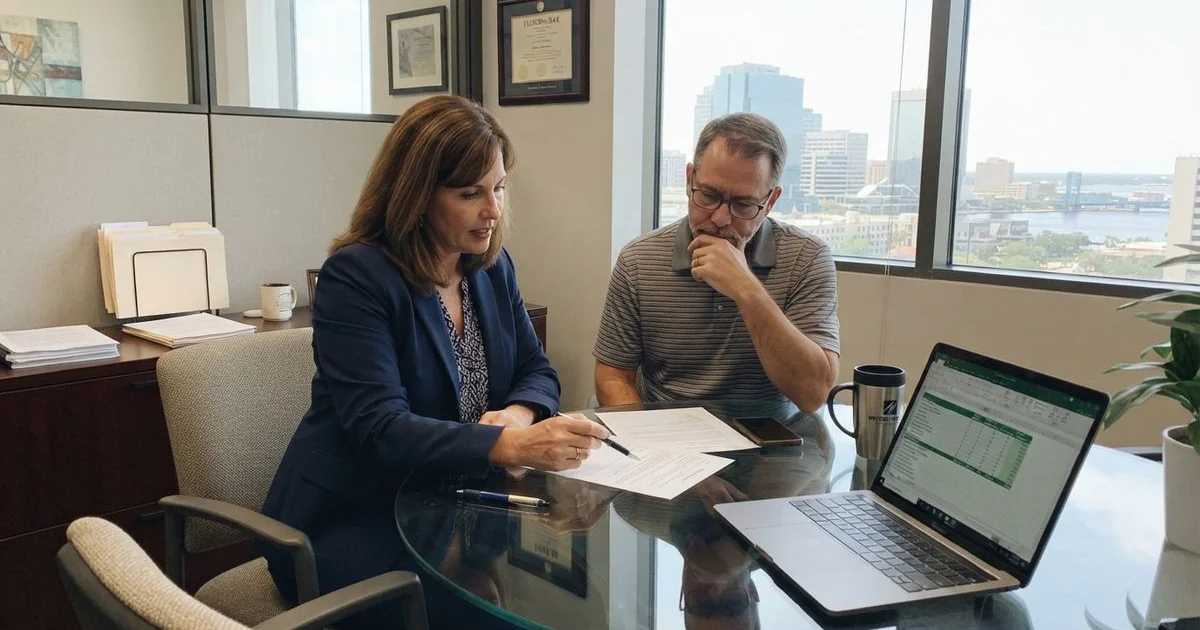
Cost is usually the first question people ask, and the honest answer is that it depends heavily on where your case stands. A homeowner who calls an attorney the week they miss a payment is in a very different financial position than one calling after being served with a lawsuit that’s already headed toward trial.
What drives the price
Three factors move the number more than anything else: how far along the case is, whether you’re negotiating or fighting, and how complicated your loan history is.
Case stage. Attorneys generally charge less for pre-suit work, like reviewing your loan and reaching out to the servicer before a lawsuit is even filed. Once you’re served with a summons, fees climb to cover drafting an answer and handling early motions. Cases that reach active litigation or discovery cost more, and cases heading to trial or appeal cost the most, since those stages require the most hearings, evidence review, and preparation time.
Negotiate, delay, or fight. If your goal is a loan modification or short sale, the legal work centers on document review and servicer negotiation rather than courtroom litigation, which tends to keep costs lower. Delaying to arrange your finances (buying time to sell the home or line up other options) sits in the middle. Fighting the foreclosure through trial, especially if the lender’s paperwork has real problems worth challenging, takes the most attorney hours and generally costs the most.
Loan complexity. A straightforward missed-payment case with clean title and one lender is simpler to handle than a loan that’s been sold multiple times, has a second mortgage or HOA lien attached, or involves a contested inheritance or divorce.

Flat fee vs hourly: what to expect from each
| Billing model | How it typically works | Good fit for |
|---|---|---|
| Flat fee per stage | Set price for a defined scope, like filing an answer and handling initial motions | Homeowners who want cost certainty early in the case |
| Hourly with retainer | Billed against a deposit, replenished as it’s drawn down | Contested cases with an uncertain path to resolution |
| Hybrid | Flat fee for filing and negotiation, hourly if the case proceeds to trial | Cases where the outcome (settle vs litigate) isn’t clear yet |
Whatever the structure, get it in writing before your first payment. Ask specifically what’s included: does the quoted fee cover just the initial answer, or also follow-up hearings if the servicer stalls or loses paperwork? Reviews of Jacksonville-area firms consistently flag billing clarity, or the lack of it, as the thing that determines whether clients feel good about their experience months later. Confusion over refund terms and undisclosed add-on fees are recurring complaints across the local market, so a firm that walks you through its billing structure without being asked is worth taking seriously.
Questions worth asking before you sign
Before committing to a retainer, ask how many contested foreclosure cases the firm has handled in the past year, not just how many foreclosure matters they’ve touched in a general practice. Ask whether loss mitigation negotiation with your servicer is included in the fee or billed as extra work. And ask what happens if your case changes direction, for example if a modification offer falls apart and you need to shift to full litigation. Firms that specialize in foreclosure defense litigation in Jacksonville Metro should be able to answer all three without hesitation.
Free or low-cost consultations are common in this market, so use that first call to compare not just price but how clearly a firm explains its own fee structure. A vague answer about cost is often a preview of how billing will go once you’re a client.
What happens if your budget can’t stretch to a full retainer
Not every homeowner can pay for full representation, and that’s worth saying plainly rather than around. Some firms offer payment plans that spread a flat fee over the life of the case, and a smaller number offer sliding-scale rates based on income. Legal aid organizations serving the Jacksonville area handle foreclosure defense for qualifying homeowners at no cost, though demand generally exceeds capacity, so applying as early as possible matters. A single paid consultation, rather than full representation, is sometimes enough to identify whether your case has defenses worth pursuing on your own, even if ongoing representation isn’t affordable right now.
Our homepage ranks Jacksonville Metro foreclosure attorneys by client sentiment and outcomes, and the criteria behind those rankings are laid out on our methodology page.
This is general information, not legal or financial advice. Fee arrangements vary by firm and case, so confirm the specifics of any quote in writing before you hire.
FAQ
- How much does foreclosure defense cost in Jacksonville?
- Fees generally rise with how far the case has progressed and how much litigation is involved. Early-stage, pre-suit help tends to be the least expensive, and cases that head to trial or appeal cost the most because of the additional hearings and preparation involved.
- Is there a flat fee for foreclosure defense?
- Some firms offer a flat fee for a defined scope, such as filing an answer and handling the first round of motions, then bill separately if the case goes to trial. Others bill hourly against a retainer from the start. Ask which model a firm uses before you sign anything.
- Does fighting the case fully cost more than negotiating a settlement?
- Usually, yes. A negotiated resolution, like a loan modification or short sale, generally involves less courtroom work than contesting the case through trial, so it tends to cost less in attorney time even though it can still take months.
- Will I owe money if I can't afford the retainer up front?
- Some firms offer payment plans or reduced consultation fees, and a few nonprofit and legal aid options exist for qualifying homeowners. Ask directly during your first call rather than assuming you don't qualify.
Related on this site
- Browse foreclosure defense litigation providers
- Served with a foreclosure summons in Florida? What to do next
- How long does a Florida foreclosure take, and what affects the timeline
- Is Florida foreclosure mediation worth it? What to know before you apply
- Loan modification attorney fees: flat rate vs hourly billing explained
- All guides →